
Idacher Game Development
We craft immersive digital experiences. Explore our development workflow, past projects, and the methodology behind our award-winning interactive entertainment. Check out our special offer for premium upgrades.
Development Workflow
Concept & Analysis
Every project begins with a deep dive into the core mechanics and target audience. We analyze market trends, define the unique selling proposition, and draft the initial technical specification document.
Prototyping & Iteration
Rapid prototyping allows us to test core loops early. Using agile sprints, we iterate on gameplay mechanics, visual style, and user interface elements based on internal playtesting sessions.
Launch & Monitoring
Post-launch support is critical. We monitor server loads, player engagement metrics, and bug reports. Continuous patches and content updates keep the community active and growing.
Project Milestones
Interactive visualization of our standard development phases. Click on the bars below to reveal specific phase details.
Abstract Portfolio








Idacher Game Development Field Guide
Core Concept: Procedural Content Generation (PCG)
PCG refers to the algorithmic creation of game content rather than manual design. Instead of hand-crafting every level or item, we write algorithms that generate these elements, allowing for vast, unique worlds in titles like "Void Horizon." This method ensures that no two playthroughs are identical.
Decision Criteria
- • Scalability: Does the game world need to expand beyond manual capacity? Essential for open-world RPGs.
- • Replayability: Will players return if levels are randomized? Critical for roguelikes.
- • Resource Budget: Do we have the team size to hand-craft 100 hours of content?
Myth vs. Fact
Key Glossary
- Seed: The starting value for a random number generator.
- Wave Function Collapse: An algorithm that builds consistent patterns from local rules.
- Biome: A distinct environmental zone with specific assets and rules.
Common Mistakes
- Relying 100% on PCG without manual "hand-sculpting" key moments.
- Ignoring playability for algorithmic complexity.
The Architecture of Immersion
Modern game development is less about pixels and more about psychological triggers. We architect systems that reward curiosity and punish stagnation. Our latest project, "Neon Dystopia," utilizes an adaptive AI that modifies enemy behavior based on player stress levels detected through input latency analysis.
- Zero-latency input processing
- Bio-feedback integration (beta)
- Modular asset pipelines
Signals of Trust & Quality
Performance Benchmarks
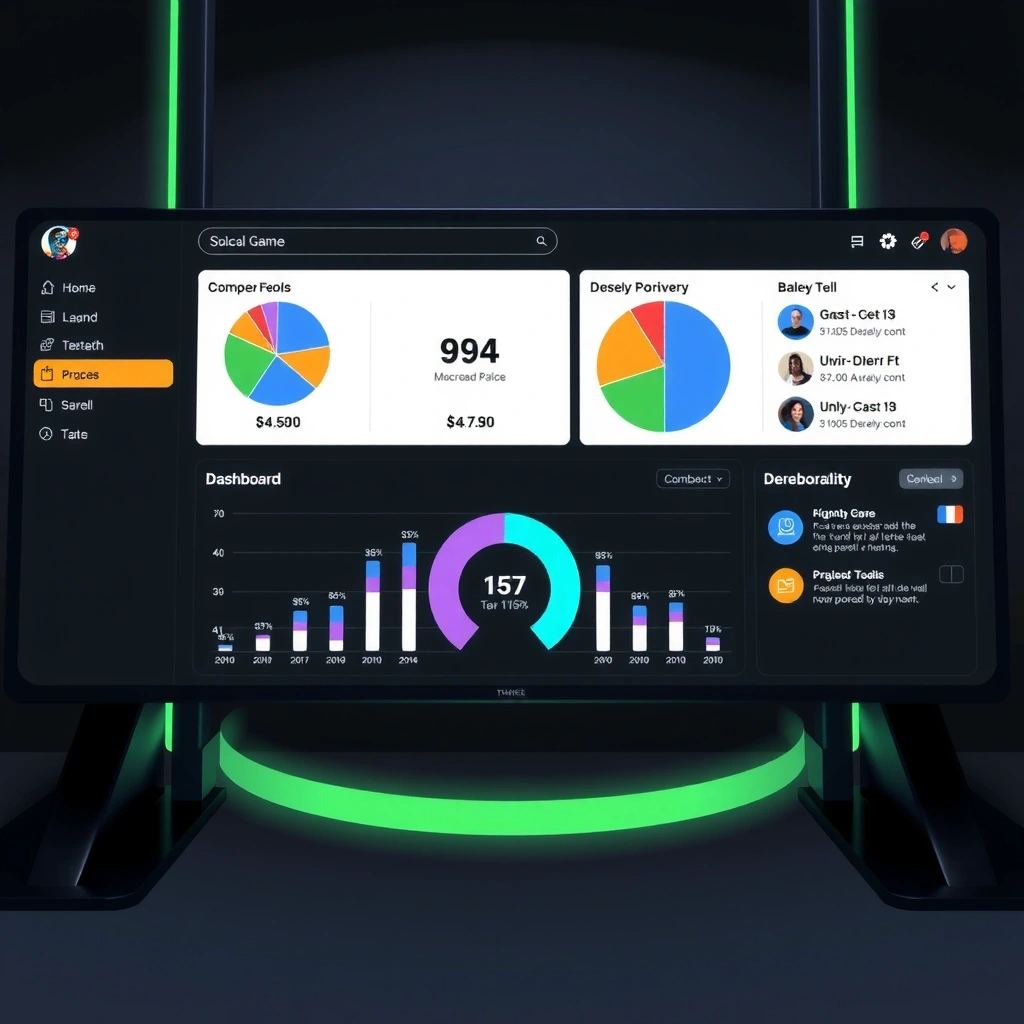
Our rendering engine maintains a stable 60 FPS on mid-tier hardware while rendering 10,000 dynamic light sources. Example: "Cyber-Racer 2077" maintained <1% crash rate during beta with 50,000 concurrent users.
Client Scenarios
"Idacher transformed our prototype into a market-ready product in 4 months. Their understanding of netcode solved our multiplayer sync issues that plagued us for a year." - Indie Studio Founder (Strategy RPG).